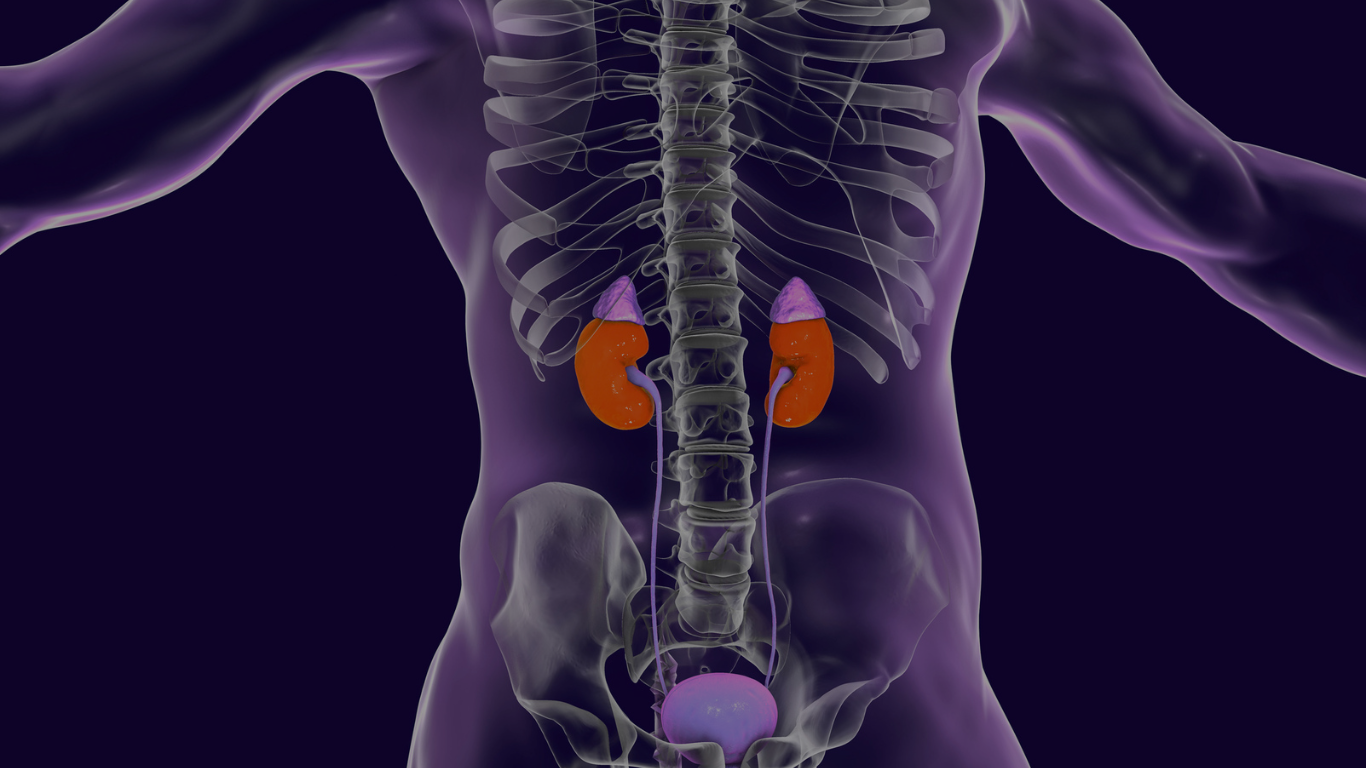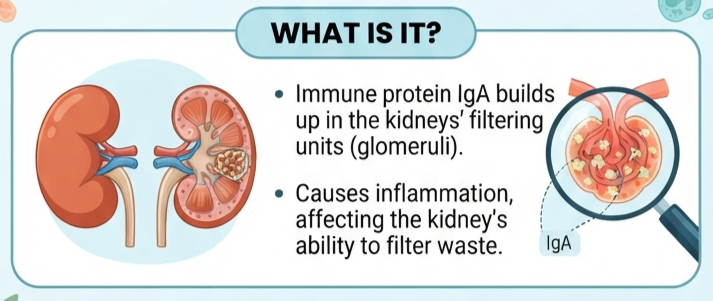
IgA nephropathy (also known as Berger’s disease) is a kidney condition that occurs when an antibody called immunoglobulin A (IgA) builds up in your kidneys.
Here is a concise breakdown of what it is and how it affects the body:
What happens?
The Role of IgA: Normally, IgA is an antibody that helps your immune system fight off infections.
The Buildup: In this condition, abnormal IgA deposits settle in the glomeruli—the tiny filtering units of the kidneys.
The Damage: This buildup causes inflammation and interferes with the kidneys’ ability to filter waste, water, and extra fluids from your blood.
Key Things to Know
Progression: It is a chronic condition, meaning it generally develops slowly over many years. While some people may have very mild symptoms, others can experience a gradual decline in kidney function.
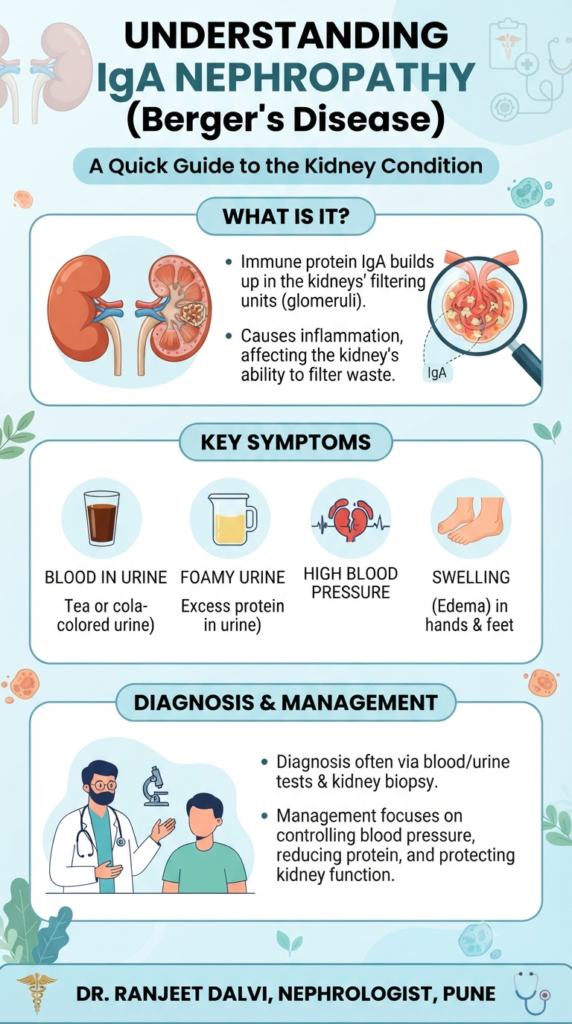
Symptoms: Because it progresses slowly, you may not notice symptoms early on. When they do appear, they often include:
Blood in the urine (which may look like tea or cola).
Foamy urine (caused by protein leaking into the urine).
High blood pressure.
Swelling (edema) in the hands and feet.
Diagnosis: Because there may be no early symptoms, it is often discovered during routine check-ups through blood or urine tests. A kidney biopsy is usually necessary to confirm the diagnosis.
Management: While there is no cure, it is managed by treating the symptoms and protecting kidney function. This typically involves managing blood pressure, using medications to reduce protein in the urine, and maintaining a healthy lifestyle.